Phase 1 demo liveBanks · Participation banks · Savings-finance companies
The marketplace that brings you buyers and sellers you do not bank yet.
ÖnGar is an e-commerce platform that brings together buyers and selling companies across Türkiye. The buyer's prepayment arrives at your institution: part of it stays blocked (all of the part above the seller's limit) and the rest goes to the seller against the collateral posted with you; if delivery fails the refund comes from the blockage first, then the collateral. ÖnGar runs the flow and issues instructions; it never holds the money.
Request a meeting for your institutionWatch the introductory film (2 min)
Narrated, with music; captions in the picture.
- Holds the money
- Your institution
- Values collateral, approves the limit
- Your institution
- Computes, issues instructions, records
- ÖnGar
- Finance model
- Participation · Conventional
“We already have this”?
Your products serve your own customers. ÖnGar brings you new ones.
Credit, deposits and escrow accounts already exist at your institution. What is missing is the marketplace that takes them to the millions of buyers and sellers who do not bank with you.
Your institution's products today
- Your own customers: the ones who come to your branch or your app.
- Separate products: credit, deposits and escrow, one by one.
- Buyers and sellers find each other outside your institution.
- Prepayments often flow outside, backed only by the seller's word.
With ÖnGar
- A marketplace open to every buyer and seller in Türkiye, including those you do not bank today.
- Marketplace, prepayment protection and collateralised financing in one flow.
- Buyers and sellers meet on ÖnGar and open accounts with you: new customer acquisition.
- The prepayment arrives as a deposit; the collateralised seller is financed in the same flow.
The problem
Prepayments flow outside the institutions today
Homes, machinery, pre-harvest produce: the buyer pays today, the goods arrive months later. In between, the only guarantee is often the seller's word.
- The buyer pays months before delivery; getting the money back after a failed delivery is slow and uncertain.
- The honest seller cannot prove it is trustworthy, so it cannot pre-sell and funds production with expensive credit.
- The finance institution does not see these payments: the customer, the collateral and the transaction stay outside.
Money flow
Where does the money stay?
The buyer's payment arrives in an account at your institution. For a sale within the limit, part of it goes to the seller and the rest stays blocked until delivery.
- The buyer pays; the payment arrives in an account at your institution.
- Within the limit, part of it goes to the seller and the rest stays blocked. The part above the limit stays blocked in full.
- The seller delivers and the buyer confirms; a 60-day hold period runs.
- The blockage is released to the seller.
Worked example
One sale, broken down
Example rate card: commission 4%, in-limit blockage 30%, damages 36% a year, delivery in 24 months, 60-day hold after delivery. Amounts from the ÖnGar engine; the institution sets the rates.
Try your own rates: calculator
- Cash sale
- $200,000
- Blocked at your institution
- $57,600
- To the seller now
- $134,400
- Commission
- $8,000
- To the buyer if not delivered (payments + damages)
- $344,000
What your institution gains
A new product line with measurable risk
- Commission incomeA transaction commission on the sale price, shared between the platform and the partner institution; the split is set in the contract with the institution.
- New customersBuyers and sellers open accounts with you; the seller relationship starts with collateral and a limit.
- Funds that stay with youThe blocked amount stays at your institution until delivery and the end of the hold period.
- Instalment financingInstalment plans are priced with your rate card and your finance model.
Risk and collateral
The limit comes from the collateral
The seller's transaction limit is what remains of the collateral your institution values after the maximum damages of the open orders are reserved.
- Collateral types: cash, mortgage, bank guarantee, vehicle pledge, assignment of receivables, insurance. The institution values them.
- Collateral term: collateral must stay valid until the orders it backs are delivered and their hold period ends; collateral the open orders still need cannot be released.
- Refund order: if delivery fails, payments are refunded from the blockage first, then from the collateral; damages run pro rata at the yearly rate on the rate card.
- Records: every money movement is an instruction (draft → sent → confirmed or rejected). A ledger entry is written only on your institution's confirmation and cannot be changed afterwards.
Finance model
For participation and conventional institutions
Limit, blockage, release and the non-delivery damages (pro rata at a yearly rate) are the same in both models; only the pricing of instalment plans and the wording differ. The model is set per institution.
Participation model
Participation banks, savings-finance companies
- In the participation model the profit share is added to the sale price once, at contract time; nothing accrues on a balance.
- In the participation model a failed delivery refunds the payments plus damages pro rata to the time elapsed at the yearly rate; no late charge applies.
- The compliance decision belongs to the institution's advisory board.
Conventional model
Banks, payment institutions
- Instalment financing costs follow the institution's rate card.
- A failed delivery refunds the payments plus damages pro rata to the time elapsed.
- A late charge applies only if the institution defines one.
Integration
From first meeting to going live in five steps
A suggested path; timing and scope are agreed together in the meeting.
- First meetingIn a meeting under a confidentiality agreement we discuss your institution's needs and how ÖnGar works.
- Demo and simulationWe go through the live demo (a read-only review environment) and the calculator with your own rates. The demo moves no real money.
- Integration planYour institution sets the rate card and the finance model; connecting your blocked-account API to one interface, the contracts and the data-protection (KVKK) process are planned together. In the participation model the design also goes to the advisory board.
- PilotAfter a written contract, a small real-money pilot (for example one seller and ten buyers).
- LiveRoll-out together with your institution, based on the pilot's results.
Interfaceholdreleaserefundindemnitystatuswebhook
Simulation
Run the numbers yourself
Enter collateral, sale and cancellation rows or generate a random example: ÖnGar's calculation engine computes the commission income, the amount paid out to the seller, the cash blocked at the partner institution, whether the collateral is sufficient and what buyers get back if nothing is delivered.
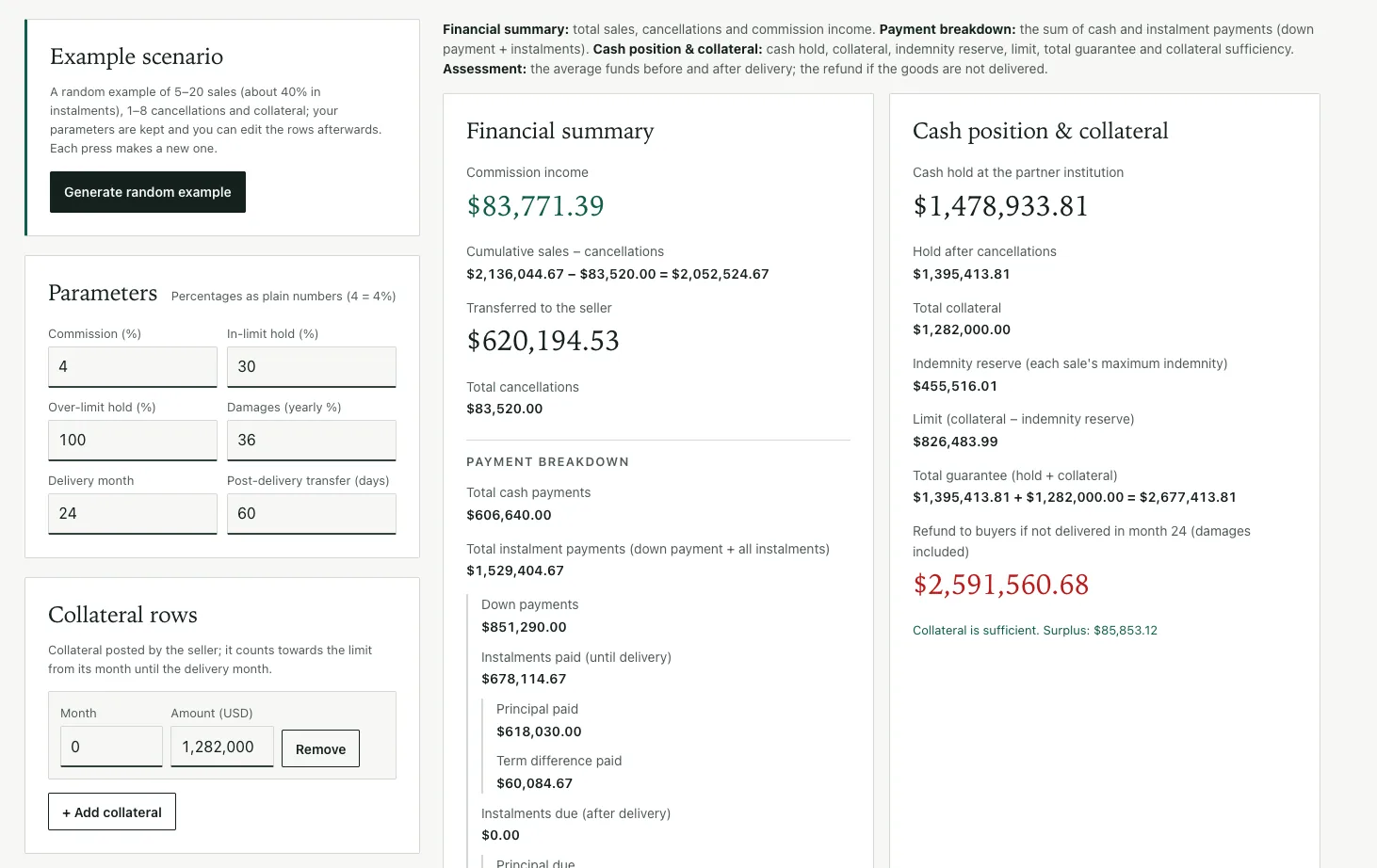 (full-size image opens in a new tab)
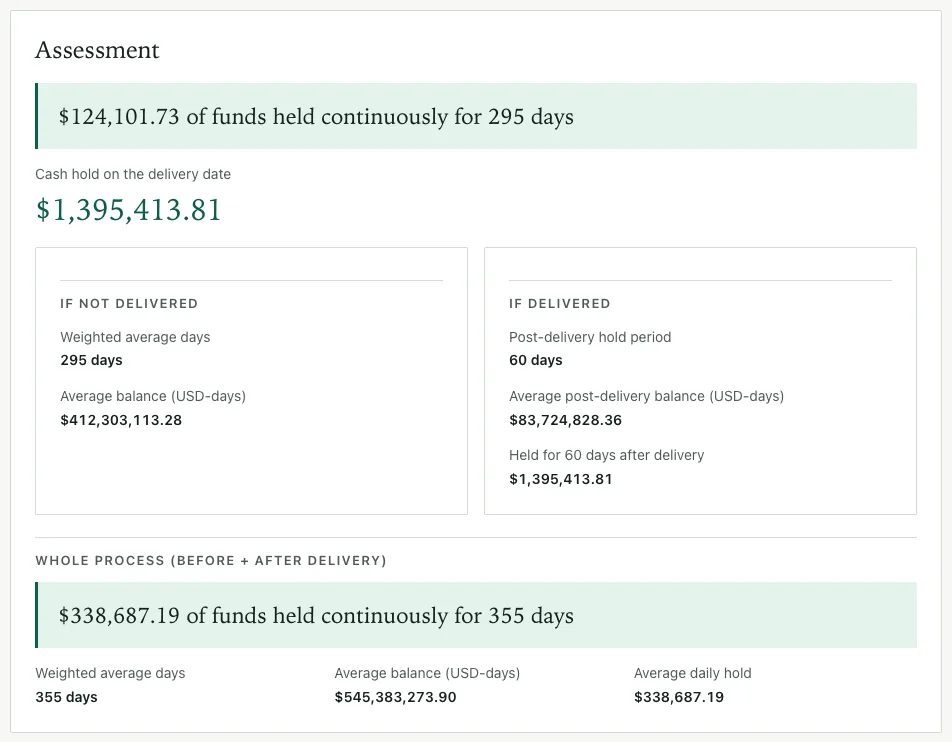 (full-size image opens in a new tab)
You need to sign in to access the simulation.
Signing in with WhatsApp takes a few seconds; afterwards you come back to the simulation.
Meeting
The summary is here. The details come under a confidentiality agreement.
The financial model, contract structure, risk parameters and integration plan are in the details dossier, open to those who sign in and accept the confidentiality agreement; we go through it together in a meeting.
Request a meeting for your institutionismail@preorderone.com
The link opens your e-mail client; your institution's name and your role are enough.
Look for yourself first
ÖnGar holds no customer money; the licence to hold funds and the customer accounts are with the partner institution. Real money flows only after a written contract with the partner. Developed by İsmail HATİPOĞLU.